

- Go to the Privy Dashboard
- Select your app from the App Dropdown in the left sidebar
- Request access to Custom authentication in the Integrations > Built-in tab of the Privy dashboard
- Navigate to the JWT Dashboard via User management > Authentication > JWT integration
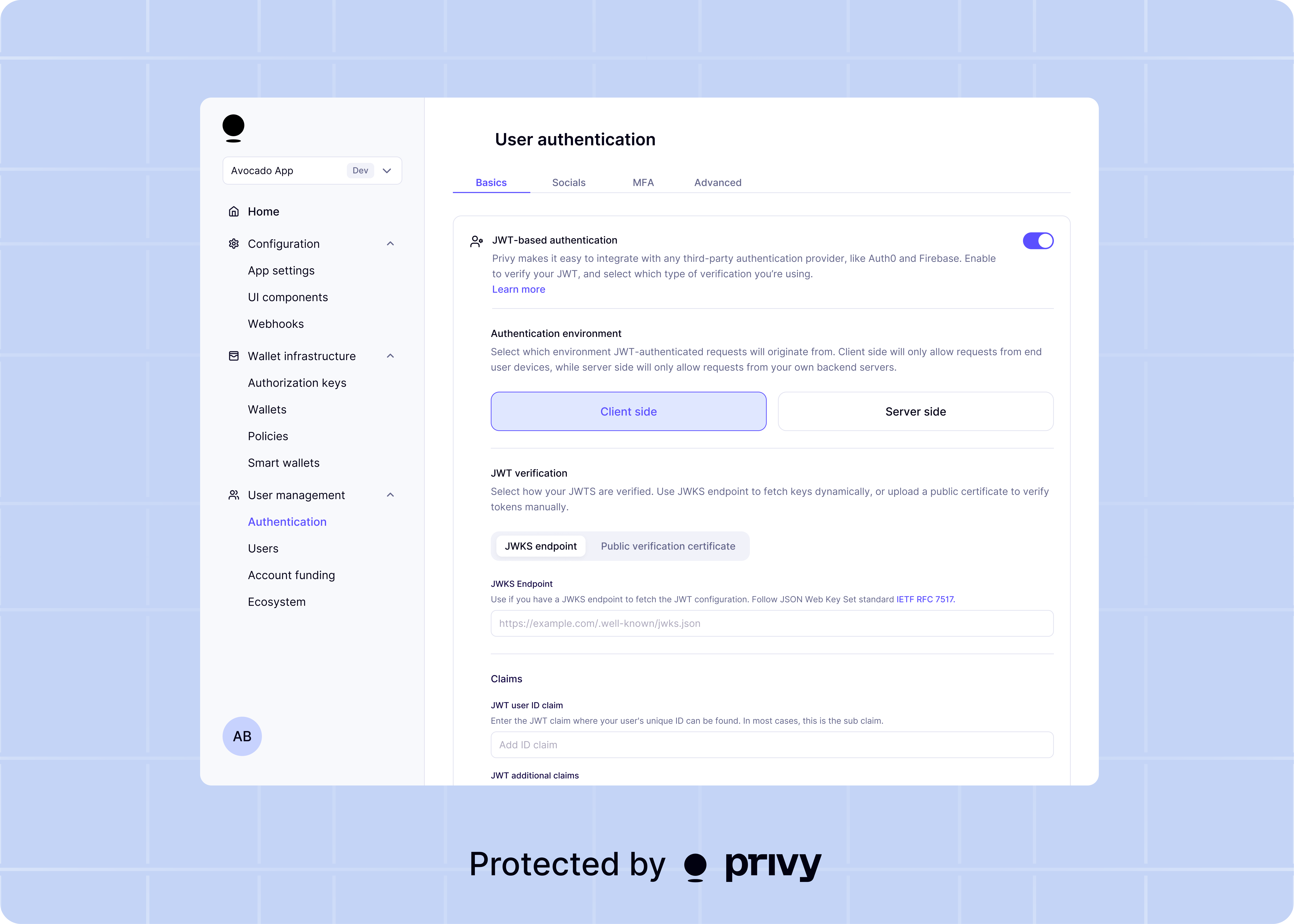
Choose where JWT-authenticated requests can originate from: client-side (end user devices),
server-side (your backend), or both.
required
Privy requires a verification key to ensure the JWTs received are valid. Both the token’s signature and its expiration time (claim) are verified to ensure secure access. This verification process helps protect user data and prevents unauthorized access to Privy services.You can provide the verification key in one of two ways:
JWKS Endpoint
JWKS Endpoint
If your provider uses JWKS to sign JWTs, provide a JWKS endpoint URL where Privy can retrieve your auth provider’s JWT public key.
Public verification key
Public verification key
If your provider uses a single key to sign JWTs, provide the corresponding public key certificate used for verification.
default:"sub"
Enter the claim from your authentication service’s JWTs that contains the ID for the user in Privy.This claim should be the unique user ID claim, typically
sub.